HOLISTIC COUNSELLING internal family systems
embracing all parts with mindful presence
“"To pay attention, this is our endless and proper work.” Mary Oliver
WELLNESS Counselling
Wellness counselling, in a philosophical sense, focuses on holistic well-being, addressing the mind, body, and spirit to foster personal growth and balance. Rooted in humanistic and existential philosophies, it emphasizes self-awareness, autonomy, and the search for meaning. The approach encourages clients to explore their inner world, align with their values, and embrace personal responsibility for their wellness journey. I often use Internal Family Systems as a modality to help clients understand their inner parts, develop self-compassion, and create harmony within themselves. This represents a paradigm shift away from pathologising clients, focusing instead on their strengths and inner resources. Wellness counselling guides individuals toward a deeper understanding of themselves, helping them integrate emotional, physical, and mental health into a fulfilling life. The process often involves fostering resilience, mindfulness, and self-empowerment.
WORK WITH christinA
Enneagram
The Integrative Enneagram is a powerful tool for self-discovery and personal growth that helps individuals explore the deeper motivations and unconscious patterns that shape their thoughts, emotions, and behaviors. It goes beyond simply identifying personality types by showing how each type can move toward growth and away from stress patterns, offering a roadmap for transformation. By revealing the underlying drivers that subconsciously influence decisions and reactions, the Integrative Enneagram helps people understand why they respond to situations in certain ways and how these patterns may have developed over time.
This approach supports greater self-awareness and self-compassion, allowing individuals to recognize automatic reactions without judgment and choose healthier, more supportive ways of being. It also fosters emotional intelligence, resilience, and the ability to navigate relationships more effectively. Through the Integrative Enneagram, people gain insight into their strengths, blind spots, and the ways they may unconsciously limit themselves, empowering them to take conscious responsibility for their personal growth, make more aligned choices, and cultivate a more balanced and authentic life.
INTERNAL FAMILY SYSTEMS
Internal Family Systems (IFS) is a pragmatic, compassionate and evidence-based approach to personal growth and healing developed by Richard C. Schwartz. The model is based on the understanding that the mind naturally contains different “parts,” each with its own feelings, beliefs, and roles. Some parts try to protect us, some carry painful emotions or memories, and others help us manage everyday life.
In Internal Family Systems all parts are welcomed with curiosity and respect. Even the parts that may feel overwhelming or difficult are understood as trying to help in some way. By gently getting to know these inner parts, people can begin to release old emotional burdens, heal past wounds, and develop a more balanced inner system.
At the centre of the IFS model is the Self. The Self is a natural state of calm, clarity, compassion, and confidence that exists within everyone. As people learn to access this inner Self, they often develop a more caring relationship with their inner world. Protective parts can begin to relax and deeper healing can take place.
Many people find that working with IFS increases emotional awareness, self-understanding, and resilience. Over time it can lead to a greater sense of inner harmony and a more connected and authentic way of living.
Jana, Psychologist, PhD, HPCSA Clinical Psychologist, endorsement
Christina is that rare person, a therapist who shines as a caring human being first and foremost. She always has her clients' best interests at heart, beaming great warmth, intelligence and insight, plus her sense of humour is a treat. Highly recommended.
https://www.psychologytoday.com/za/counselling/jana-lazarus-glencairn-wc/828642

career guidance
Finding a fulfilling career begins with understanding yourself. At The Synergy Space, we use a combination of personality, competencies, and interests assessments to help you explore your strengths, preferences, and unique potential. By uncovering your natural tendencies, talents, and passions, you gain the clarity to:
Make informed career decisions
Align your work with your personality and skills
Increase satisfaction, performance, and personal growth
Career guidance is more than choosing a job, it’s about creating a life and work path that resonates with who you truly are, unlocking your potential, and stepping confidently into a career that suits your strengths and passions.
counselling 1:1
Try something new
A DROP-IN MEDITATION
The Self is always present at the core of our being. We may not be aware of it or connected to it. A drop-in meditation can assist us in connecting with our core.
https://www.youtube.com/watch?v=PMCAbZ5aJSU
Target Specific Issues
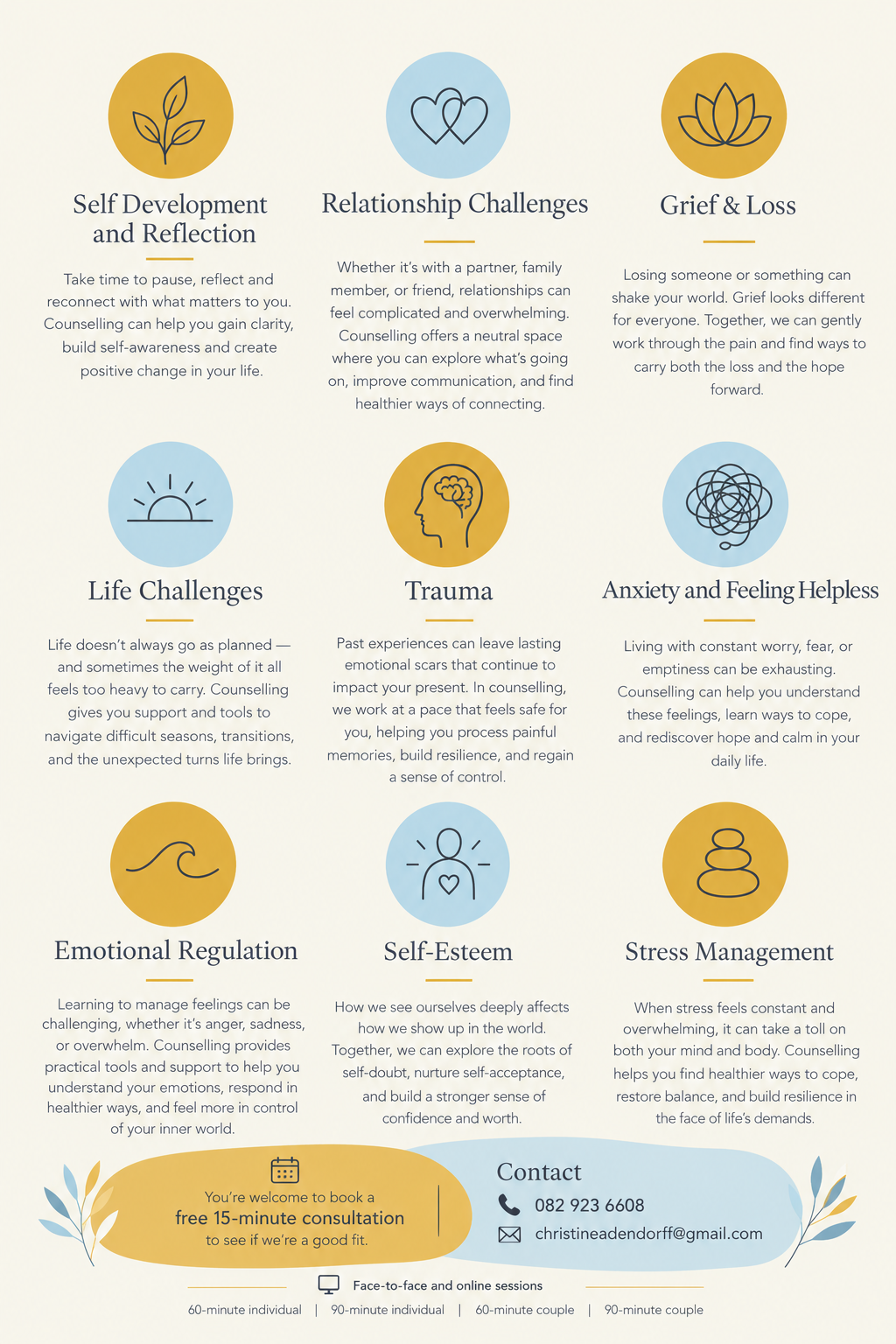
If depression, anxiety, trauma, addiction, eating disorders, OCD or stressors related to interpersonal conflict, career stress or life transitions have affected your quality of life counselling might be right for you.
IFS is non-pathologizing (it does not reduce a client to their diagnosis), it supports well-being, builds resilience and improves self-esteem.
What is Internal Family Systems (IFS) Therapy?
Internal Family Systems (IFS) is a therapeutic approach that helps people understand and relate to the different “parts” within themselves. Developed by Dr. Richard Schwartz, it is based on the idea that the mind is naturally made up of multiple inner voices or aspects that influence how we think, feel, and respond to life.
Rather than trying to suppress or eliminate these inner experiences, IFS focuses on building awareness, connection, and internal balance.
The Core Idea Behind IFS
IFS is grounded in the understanding that every person has a core Self. This Self is not something you need to create or develop because it is already present within you. It is often experienced as calm, grounded, compassionate, and clear.
Healing in IFS happens as we learn to access this Self and relate to our inner parts from a place of curiosity, presence, and care rather than judgment or control.
Where IFS Comes From
IFS was developed in the 1980s by family therapist Dr. Richard Schwartz. Through his clinical work, he noticed that clients often described distinct inner states or “voices” that seemed to carry different emotions, beliefs, and intentions.
Instead of viewing this as inner conflict or dysfunction, he began to understand it as an organised internal system. This shifted the way therapy could approach emotional distress and offered a more compassionate and collaborative framework for inner healing.
Understanding Inner Parts
In IFS, all parts are seen as having positive intent, even when their strategies feel extreme or unhelpful.
These parts are often understood in two broad categories:
Vulnerable parts (sometimes called exiles):
These carry emotional pain, fear, shame, or unmet needs that may stem from earlier life experiences.
Protective parts:
These work to prevent distress by managing situations, controlling emotions, staying alert, or keeping painful feelings at a distance.
Although their behaviours can feel challenging, they are understood as protective strategies that developed to keep you safe.
What Happens in an IFS Session
IFS sessions take place in a supportive and non-judgmental space where you are guided to gently explore your inner world at a pace that feels safe.
You may be invited to notice different parts of yourself and begin to understand how they show up in thoughts, emotions, and patterns of behaviour.
The therapist supports you in:
recognising inner parts as they arise
understanding what each part is trying to do for you
developing curiosity and compassion toward your inner system
strengthening connection with your core Self
Over time, this process can help reduce inner conflict and support a greater sense of internal harmony.
THE BENEFITS OF INTERNAL FAMILY SYSTEMS AS A FRAMEWORK
Reframes Emotional Struggles: IFS helps individuals view depression, anxiety, stress, and other emotional challenges as meaningful protective responses to life experiences, rather than as fixed diagnoses or personal flaws.
Promotes Self Compassion: By understanding and accepting all parts of ourselves, IFS encourages a kinder and more compassionate relationship with oneself, reducing self-criticism and inner conflict.
Deepens Self-Understanding: Through working with different parts of the mind, individuals gain greater insight into their inner world, emotional patterns, and what drives their thoughts, feelings, and behaviours.
Improves Relationship Dynamics: By recognising and unblending from protective patterns, individuals can respond more openly and authentically in relationships, leading to clearer communication and deeper connection.
Supports Emotional Regulation: IFS helps individuals notice and work with activated parts, improving the ability to stay grounded during stress, overwhelm, or emotional intensity.
Prepares for Future Emotional Challenges: IFS equips people with inner awareness and tools to navigate emotional difficulties with greater resilience and steadiness over time.
Empowers through Self-Leadership: IFS helps individuals take charge of their internal world, fostering a sense of balance, clarity, and agency in thoughts, emotions, and behaviours.
Get anytime access to our growing Inner Work library. As a monthly subscriber, you’ll receive ongoing access to a nurturing collection of Internal Family Systems (IFS)–informed classes, guided practices and exclusive therapeutic resources designed to support deep emotional healing and self-understanding, weekly. Each month, new content is added to help you gently connect with your parts, strengthen your Self-leadership, and move toward greater inner harmony, at your own pace and in your ow